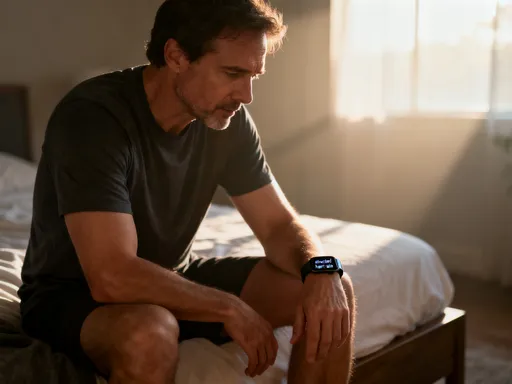
Why I Finally Got Serious About Tracking My Health — And What Changed
For years, I ignored the subtle signals my body sent — fatigue, mood swings, poor sleep — until they became impossible to overlook. What I discovered wasn’t a quick fix, but a systematic approach to health monitoring that transformed how I live. It’s not about obsession; it’s about awareness. By tracking key patterns over time, I gained real control. This is how I turned confusion into clarity, one daily check-in at a time.
The Wake-Up Call: When Ignoring My Body Backfired
There was a time when I believed I was doing everything right. I ate balanced meals, walked regularly, and avoided processed foods most days. On paper, my lifestyle looked healthy. Yet, I was constantly tired. Not the kind of tired that goes away after a good night’s sleep, but a deep, persistent exhaustion that made even simple tasks feel overwhelming. Mornings were sluggish, afternoons were marked by brain fog, and evenings brought irritability I couldn’t explain. I chalked it up to being busy — a working mother with responsibilities, a full schedule, and endless to-do lists. I told myself this was just how life was supposed to feel in midlife.
Then came the moment that changed everything. I found myself canceling plans with close friends — not because I didn’t want to see them, but because I physically couldn’t muster the energy. I started relying on coffee not to enjoy a morning ritual, but to function. Even small decisions, like what to cook for dinner, felt exhausting. That’s when it hit me: I wasn’t fine. The absence of a diagnosed illness didn’t mean I was thriving. My body had been sending warnings for years — in the form of restless sleep, inconsistent energy, and mood fluctuations — but I had dismissed them as normal. The turning point wasn’t a dramatic medical crisis, but the quiet realization that I deserved to feel better than just ‘not sick.’
This was the moment I decided to stop guessing and start observing. I didn’t want another generic wellness trend or a restrictive diet. What I needed was clarity. I began to wonder: What if I could understand my body the way I understood my calendar or my budget? What if, instead of reacting to symptoms, I could anticipate them? That curiosity led me to the practice of systematic health monitoring — not as a temporary fix, but as a long-term tool for self-knowledge and resilience.
What Health Monitoring Really Means (And What It Doesn’t)
When I first looked into health tracking, I was overwhelmed by the options: fitness trackers, smartwatches, sleep monitors, hydration apps, and endless wellness journals. It was easy to assume that effective monitoring required expensive gadgets or obsessive data entry. But over time, I learned that true health monitoring isn’t about collecting numbers for the sake of numbers. It’s about gathering meaningful information to understand how your body responds to daily choices and external stressors. The goal isn’t perfection — it’s insight.
One of the biggest misconceptions I had to unlearn was that tracking meant judgment. I worried that recording my sleep or energy levels would only lead to guilt if I ‘failed’ to meet some invisible standard. But I came to see that health monitoring is not about control or self-punishment. It’s not about achieving an ideal number on a scale or hitting 10,000 steps every day. Instead, it’s a compassionate way of listening to your body. It allows you to notice patterns without criticism, to see fluctuations as information rather than failure.
Another important distinction is that health monitoring is not a substitute for medical diagnosis. It doesn’t replace visits to a healthcare provider or lab tests. What it does is empower you with context. When you have a record of how you’ve been feeling over weeks or months, you can have more informed conversations with your doctor. You’re no longer saying, ‘I feel tired sometimes,’ but rather, ‘I’ve noticed my energy drops every Tuesday and Thursday afternoon, especially after meetings, and it’s been happening consistently for three weeks.’ That kind of detail makes a difference.
Ultimately, I learned that effective monitoring is personal. It’s not about copying someone else’s routine or using the most advanced technology. It’s about choosing what matters to you and building a system that fits your life. For me, it meant focusing on a few key areas where I knew I struggled — energy, sleep, and mood — and letting go of the rest. This shift in mindset — from tracking for validation to tracking for understanding — was the foundation of lasting change.
The Core Signs Worth Watching (And Why They Matter)
Once I committed to monitoring my health, I had to decide what to track. There’s no shortage of metrics available — heart rate, steps, calories, water intake, screen time, and more. But I quickly realized that not all data is equally valuable. What mattered most were the signs that reflected my internal balance, not just surface-level activity. After experimenting and consulting evidence-based health resources, I identified five core indicators that gave me the clearest picture of my well-being: sleep quality, energy levels, digestion, mood, and recovery.
Sleep quality, for instance, is more than just how many hours I spent in bed. It includes how easily I fell asleep, how often I woke up, and how rested I felt in the morning. Poor sleep doesn’t just leave you tired — it affects hormone regulation, immune function, and cognitive performance. Research consistently shows that chronic sleep disruption is linked to increased risk of metabolic issues, mood disorders, and decreased resilience to stress. By tracking my sleep patterns, I began to see how late meals, screen time, and even emotional stressors impacted my ability to rest deeply.
Energy levels were another critical marker. Unlike fatigue, which is a symptom, energy is a dynamic state influenced by multiple factors — nutrition, hydration, movement, and emotional load. I started rating my energy on a simple scale from 1 to 5 each day, noting when I felt strong versus drained. Over time, I noticed that my energy wasn’t random. It followed predictable patterns tied to my routine. For example, I often experienced a dip between 2:00 and 4:00 p.m., especially if I skipped a mid-morning snack or drank too much coffee early in the day.
Digestion was another area I had overlooked. Bloating, irregularity, or discomfort after meals can signal food sensitivities, stress-related gut changes, or imbalances in gut microbiota. By simply noting how I felt after eating, I discovered that certain foods — even healthy ones like raw vegetables or dairy — consistently caused discomfort. This wasn’t about eliminating entire food groups, but about timing and portion. Small adjustments, like cooking vegetables instead of eating them raw or having dairy with meals rather than on an empty stomach, made a noticeable difference.
Mood and emotional well-being were equally important. Mood isn’t just about happiness — it includes irritability, motivation, focus, and emotional resilience. I began tracking my mood daily, not to judge myself, but to identify triggers. I noticed that days with poor sleep or high stress often led to lower patience and less enjoyment in activities I usually loved. This awareness helped me plan better — scheduling lighter tasks on low-energy days and protecting time for rest.
Finally, recovery — how quickly my body bounced back from physical or mental exertion — became a key indicator. Did I feel sore after a walk? Did it take me days to recover from a busy week? Recovery reflects overall resilience and can signal whether I’m overextending myself. By paying attention to this, I learned to respect my limits and prioritize rest as an active part of health, not a luxury.
Building My Simple Tracking System: Tools That Actually Worked
With these core signs in mind, I set out to create a tracking system that was sustainable, not stressful. My first attempt was a detailed paper journal — a grid with checkboxes for sleep, water, meals, exercise, and mood. It looked impressive, but within a week, I stopped using it. The problem wasn’t the idea, but the execution. It required too much time and precision, and when I missed a day, I felt discouraged and gave up.
I realized I needed something simpler — a system that fit into my existing routine, not one that demanded a complete lifestyle overhaul. I shifted to a minimalist approach: a small notebook I kept on my nightstand, where I spent just three to five minutes each evening reflecting on the day. I focused on three metrics: sleep quality, energy level, and mood, each rated on a 1–5 scale. I added one sentence of observation — for example, ‘Felt tired after 3 p.m. — had coffee at 10 a.m. and skipped lunch.’ This tiny habit took almost no effort, but over time, it revealed powerful patterns.
After a few months, I experimented with digital tools. I tried several health apps that synced with wearable devices, but many were too complex or pushed notifications that felt intrusive. The one I eventually stuck with was a basic journaling app with customizable templates. It allowed me to log the same three metrics with a few taps and included a notes section for reflections. The advantage was consistency — I could review weekly summaries and spot trends without digging through pages.
The real breakthrough was designing a routine that worked with my natural rhythm. I made my check-in part of my evening wind-down — after brushing my teeth, before reading. It became a moment of quiet reflection, not a chore. On mornings when I felt particularly good or bad, I added a quick note about what I ate, how I moved, or any stressors. I never tracked everything at once. Instead, I rotated focus — one week on hydration, the next on meal timing — so I didn’t feel overwhelmed.
What made this system work was its flexibility. There were days I forgot to log, weeks when I didn’t open the app, and moments when I didn’t feel like writing anything. But I learned that missing a day didn’t ruin progress. Health monitoring isn’t about flawless consistency — it’s about long-term awareness. By keeping it simple and forgiving, I built a habit that lasted.
What the Data Revealed: Patterns I’d Never Noticed Before
After three months of consistent tracking, I began to see patterns that had been invisible before. The most striking was the connection between poor sleep and afternoon energy crashes. I had always assumed my 3:00 p.m. slump was just part of the workday, but the data showed a clear trend: on nights when I slept less than six and a half hours or woke up more than once, my energy dropped sharply the next afternoon. This wasn’t just fatigue — it affected my focus, decision-making, and patience with my family.
Another revelation was how hydration and meal timing influenced my mood. I discovered that if I skipped breakfast or waited until noon to drink water, I was more likely to feel anxious or irritable by midday. On days when I started with a glass of water and a balanced breakfast — protein, fiber, healthy fat — my mood was more stable, and I made better food choices later. This wasn’t about strict rules, but about noticing cause and effect. Small, early choices had ripple effects throughout the day.
One of the most surprising findings was the role of stress markers I hadn’t thought to track. I started noting days when I felt emotionally overwhelmed — not as a mood score, but as a separate observation. When I compared these entries with my sleep and energy logs, I saw that high-stress days almost always led to lighter sleep and lower energy the next day, even if I didn’t feel ‘tired’ at bedtime. This taught me that stress isn’t just emotional — it’s physical. My body was carrying the weight of mental load, even when I didn’t realize it.
I also noticed that weekends weren’t the reset I thought they were. I often stayed up later, ate more processed foods, and skipped movement — assuming I ‘deserved’ a break. But the data showed that these habits led to Monday fatigue and low mood. Instead of recovering, I was depleting. This insight led me to reframe weekends not as a time to abandon routine, but as an opportunity to recharge in sustainable ways — like walking in nature, cooking nourishing meals, or practicing mindfulness.
Seeing these patterns didn’t make me anxious — it made me empowered. I wasn’t at the mercy of random fluctuations. I had evidence that my choices mattered. This wasn’t about perfection, but about awareness. And with awareness came the ability to make informed adjustments.
Turning Insights Into Action: Small Shifts, Real Results
Armed with data, I began making small, intentional changes. The first was adjusting my bedtime by just 30 minutes. I didn’t force myself to sleep earlier overnight — instead, I started winding down 30 minutes sooner, dimming lights, and avoiding screens. Within two weeks, my sleep quality improved, and I noticed a ripple effect: I woke up more easily, had more energy in the morning, and felt less tempted to reach for caffeine. This small shift didn’t require willpower — it required awareness.
I also changed how I approached meals. Instead of waiting until I was ravenous, I began eating balanced snacks mid-morning and midafternoon. This stabilized my blood sugar and prevented the energy crashes that led to poor food choices. I didn’t follow a strict diet — I simply paid attention to how different foods made me feel. Over time, I naturally gravitated toward meals that sustained me, not just satisfied me temporarily.
One of the most impactful changes was learning to plan around my energy patterns. Instead of pushing through low-energy periods, I started scheduling demanding tasks for mornings, when my focus was sharpest, and saving lighter chores for the afternoon. I also built in short breaks — a five-minute stretch, a mindful walk around the block — to reset during long work sessions. These proactive adjustments replaced reactive fixes like naps, sugar, or last-minute caffeine, which only masked the problem.
The shift from reactive to proactive health management was profound. I stopped waiting for symptoms to appear before making changes. Instead, I used trends — not daily fluctuations — to guide my choices. If I saw a pattern of low energy on Wednesdays, I’d review my Tuesday evening routine. If mood dips followed late nights, I’d prioritize sleep the night before important social events. This long-term, pattern-based approach reduced stress and increased my sense of control.
Making It Last: How Monitoring Became a Lifelong Habit
The biggest challenge wasn’t starting — it was sustaining. There were weeks when I forgot to track, days when I felt too tired to log anything, and moments when I questioned whether it was worth it. What kept me going wasn’t discipline, but self-compassion. I learned to treat missed entries not as failures, but as part of the process. Health monitoring isn’t about flawlessness — it’s about showing up, even imperfectly.
I also made sure the system evolved with my life. When I traveled, I simplified tracking to just sleep and mood. During busy seasons, I reduced frequency from daily to every other day. Flexibility prevented burnout and made the practice sustainable. I stopped seeing it as a rigid habit and started viewing it as a tool I could adapt as needed.
Over time, monitoring became more than a routine — it became a mindset. I began to approach health not as a series of isolated goals, but as an ongoing conversation with my body. I noticed changes in my posture, breathing, and even how I spoke to myself. I became more patient, more observant, and more respectful of my limits. This wasn’t about achieving a perfect state of wellness, but about cultivating a deeper relationship with my well-being.
Today, health monitoring is no longer something I ‘do’ — it’s part of how I live. It has reshaped my priorities, improved my resilience, and given me a sense of agency I didn’t know I was missing. It’s not a trend I followed or a phase I went through. It’s a long-term commitment to awareness — one that continues to pay dividends in energy, clarity, and peace of mind.
Health monitoring isn’t about chasing numbers — it’s about listening. By building a simple, consistent system, I stopped ignoring my body and started understanding it. This shift didn’t just improve my energy or sleep; it reshaped my relationship with my own well-being. It’s not a trend, but a long-term commitment to awareness — and honestly, I wish I’d started years ago.